Saturday, 11 May 2013

Living in trust: Readings of May 10th

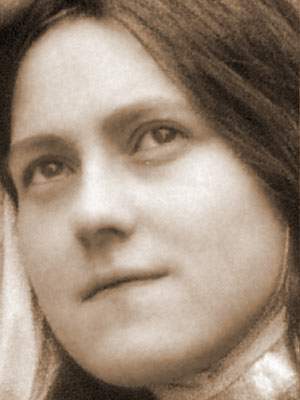
My last entry for the next couple of days is an opportunity for me to rectify a mistake I did 6  months ago. Back then, I blogged ( for the Jesuit Scholastic and Brotohers blog "Ïbo et Non Ridibo" )about a Belgian St, Saint Damien of Molokai. His is a very interesting story, and I wrote about him back then because some sites listed his feast day as being October, which is the day he was canonized. But in fact, his actual feast day was May 10th -so, yesterday!- the day he  first landed in Hawaii to live out his mission.  This is an exert from the blog entry I wrote back in October:


 St Damien (1840-89) was a seemingly ordinary 19th century saint, but he left his own mark on the world due to his ability to go the extra mile and offering his life to those who needed it the most. He didn't do anything extraordinary; he just placed himself in a position that nobody wanted to be in. He left his native Belgium to go live with people suffering from leprosy in Hawaii. He himself would eventually die of it. In that simple offering, he was able to serve this people with his loving presence for a short while. His story is short and simple. His act was not. And the responses to this act are what make the story even more compelling.


One of the first reactions to his life was one of criticism from  a Presbyterian minister in Hawaii. The minister didn't like Damien’s methods and said that his leprosy could only be attributed to his own carelessness! What’s incredible is that two famous people actually took the time to respond to this attack, and to defend the future saint. 

 The first was a direct response to the minister from a fellow Presbyterian,  Robert Louis Stevenson.The Scottish novelist who wrote works such as Treasure Island and The Strange Case of Dr Jekyll and Mr Hyde, had visited Hawaii and heard of the attacks on Fr.Damien. He took it upon himself to respond to the minister who criticized the good Padre. In his letter he stated, “But, sir, when we have failed, and another has succeeded; when we have stood by, and another has stepped in; when we sit and grow bulky in our charming mansions, and a plain, uncouth peasant steps into the battle, under the eyes of God, and succors the afflicted, and consoles the dying, and is himself afflicted in his turn, and dies upon the field of honor – the battle cannot be retrieved as your unhappy irritation has suggested. It is a lost battle, and lost for ever. One thing remained to you in your defeat – some rags of common honour; and these you have made haste to cast away.”

The second famous person to react to Fr Damien's selfless act,was Gandhi. He wrote that Damien had been an inspiration for his own social initiatives in India. He continued this way, “The political and journalistic world can boast of very few heroes who compare with Father Damien of Molokai. The Catholic Church, on the contrary, counts by the thousands those who after the example of Fr. Damien have devoted themselves to the victims of leprosy. It is worthwhile to look for the sources of such heroism”.


forums.catholics.com
                                                     Father Damien on his death bed

Readings: 


As we continue our 3 week journey through Acts and John, 3 themes really stand out today: Doing God's will as opposed to ours; Accepting pain as a necessary part of Joy; Trusting that if we genuinely ask God, we shall receive. That 3rd one is a little more tricky and needs to be taken with a grain of salt, but let's see how they all fit in with Friday's Saint of the day and the readings.
 You'll remember that in my last entry, -for Thursday's readings- we read about Paul losing patience with the Jews and Greeks of  Corinth. I guess Paul had taken the decision that his work was done here, there was no sense in wasting any energy on this stubborn people that wanted nothing to do with Jesus or Paul's message of the resurrection.. he EVEN turned to instructions of Jesus (related in Matthew 10:14 and other passages i'm sure!) to make his point, by shaking the dust of his feet, as he intended to move on from Corinth and go to the Gentiles. However, God makes it clear to him in a dream that this is not to be.. He lays it out for Paul, saying that he can't be afraid to continue speaking despite the hostility, because there are still people who will receive the message. We even saw it in Thursday's readings, that the leader of the Synagogue was converted  by Paul's testimony.
  So, not our will...but God's will be done. Sometimes, we may think that there's nothing left for us to do, and we're ready to give up on something, or we think it's not really our place to be doing whatever ministry we're doing...but if it helps people...even just one single person, then who are we to say that we're not doing God's will? The problem for some Catholics, is that they look at the likes of St Damien, or St Theresa of Avilla, and they say 'who can ever live up to that?'  It's true, not many could, but why would anyone assume that this is the only thing God wants us to do in order to do His will? As one priest said in a homily today, we need to ask for the grace to recognize our own strengths, and to realize that therein lies the way in which we can accomplish God's will. So we're not all called to be self sacrificing Saints...does that mean we can't fulfill God's will? Of Course Not!!!  Although Not saints, there is much we can do in God's name, if we only ask for the strength to do so!!
 This ties in somewhat with Jesus words from the book of John, around Asking, and we shall receive. I never quite knew what to make around this passage and the various variants of it throughout the Bible - including Mark 11:23 which speaks of our ability to move mountains if we ever so willed it-.Anyone who expects that God will provide anything we ask for is not really understanding that this passage is really about Trusting in God, not getting all that we desire. So I've wrestled with this passage for years, until I went on my pilgrimage.

  Every Jesuit novice, during their first year of studies, around the end of that year, is asked to make a pilgrimage to anywhere they wish -within limits.- The way it works, is that you're given 50 $, and a one way ticket to or from some place. You have a month to get to that place and to come back to the novitiate -this is how we're doing it in Canada. I'm told it's not like that in every Jesuit province!- For my pilgrimage, I opted to hike across the Appalachians for 2.5 weeks, and after that time, I slowly made my way to Boston, which would be my last stop before heading home. That meant I would have to ''raise" money in Boston to secure my bus ride back to Montreal -where the Novitiate is-.  The superior of the Jesuit community that was hosting me in Boston, encouraged me to go begging in the streets of Boston, and that whatever money I hadn't raised during that period, the community would supply the rest.  Oddly enough that day, the gospel passage was the one from Mark, the whole bit about moving mountains. Again, my reaction to it was one of skepticism ("We all know God doesn't work that way!"). So I went around to some Churches in Boston and I sat on a street corner with my  " jesuit on pilgrimage. Need to get home"sign. At one point, sitting on that street corner, I revisited that verse.  What is the thing I wanted more than anything else at that point in time? At least half the price of my bus ticket home, would have amounted to about 50$.  "so offer it up"said a little voice within.  So i did...that figure became my immovable mountain, and I trusted that God would provide with all my heart. With time, I had raised about 30$ with all the money I had left over. It wasn't a super productive day, but I had done my share. And as for the prayer I had made about 50$, I felt validated in my skepticism, but still at peace with God who had provided so much for me during the whole month. At around 4pm, I was getting ready to pack it in...and a couple from Texas stopped to talked to me. They looked like hippies, so I really wasn't expecting anything at all from them, but I also understood that part of my ministry there was to be present to people. And so I chatted with them for a bit. After a while, the gentleman pulled out his wallet, and gave me a 20$ .I now how exactly 50$
  I still get teary eyed sharing this story. I don't understand any of it. All day long, people had never given me more than 5. Why at this moment, when I was ready to quit, did God grant me this prayer? Even more painfully, why did he fulfill what I desired at that point in time,  but he let my sister die at the age of 32 after an 8 year battle with cancer -despite my vigorous prayers for her healing-?. It's a mystery. But Jesus does provide us one of the answers in today's Gospel: We will suffer.
But in our suffering, we will journey to a joy that is unparalleled to any joy we've ever known in our entire lives.  A joy rooted in God, and in our understanding of Jesus's mission in this world.
 But in the meantime, we grieve. And as has been mentioned in the readings for two seperate days, we grieve while the world rejoices. When Jesus hung on a Cross...many probably were very relieved that this man bent on turning the established order on its head had finally met his end and rejoiced. Just like today, many in the secular culture rejoice at Churches closing down, at religion being taken out of public schools etc...but in our grief, we are brought closer to God, and made stronger in our journey. And our Lord continues to care for us, but not on our terms. On his. Which means, there will be loss, and there will be agony. But these only pave the way for the greater joy that is to come when we finally meet our Lord, face to face.


Acts 18: 9 - 18
9And the Lord said to Paul one night in a vision, "Do not be afraid, but speak and do not be silent;
10for I am with you, and no man shall attack you to harm you; for I have many people in this city."
11And he stayed a year and six months, teaching the word of God among them.
12But when Gallio was proconsul of Acha'ia, the Jews made a united attack upon Paul and brought him before the tribunal,
13saying, "This man is persuading men to worship God contrary to the law."
14But when Paul was about to open his mouth, Gallio said to the Jews, "If it were a matter of wrongdoing or vicious crime, I should have reason to bear with you, O Jews;
15but since it is a matter of questions about words and names and your own law, see to it yourselves; I refuse to be a judge of these things."
16And he drove them from the tribunal.
17And they all seized Sos'thenes, the ruler of the synagogue, and beat him in front of the tribunal. But Gallio paid no attention to this.
18After this Paul stayed many days longer, and then took leave of the brethren and sailed for Syria, and with him Priscilla and Aq'uila. At Cen'chre-ae he cut his hair, for he had a vow.
Psalms 47: 2 - 7
2For the LORD, the Most High, is terrible, a great king over all the earth.
3He subdued peoples under us, and nations under our feet.
4He chose our heritage for us, the pride of Jacob whom he loves. [Selah]
5God has gone up with a shout, the LORD with the sound of a trumpet.
6Sing praises to God, sing praises! Sing praises to our King, sing praises!
7For God is the king of all the earth; sing praises with a psalm!
John 16: 20 - 23
20Truly, truly, I say to you, you will weep and lament, but the world will rejoice; you will be sorrowful, but your sorrow will turn into joy.21When a woman is in travail she has sorrow, because her hour has come; but when she is delivered of the child, she no longer remembers the anguish, for joy that a child is born into the world.22So you have sorrow now, but I will see you again and your hearts will rejoice, and no one will take your joy from you.23In that day you will ask nothing of me. Truly, truly, I say to you, if you ask anything of the Father, he will give it to you in my name.


Friday, 10 May 2013

Readings for May 9th


A late entry for yesterday's readings. This is partly caused by me not having a laptop- currently in the shop for repairs- and developing a routine around the community computer. Another note is that today and tomorrow will be my last 2 entries for the week. Until Next Wednesday, I'll be in Chicago, and will not be blogging from there. I'll be back in the full swing of things by next thursday! As for today's entry on Yesterday's readings...another Bishop

St. Pachomius
ABBOTT AND BISHOP
Feast: May 9


Information:
Feast Day:May 9
Born:292, Thebes, Egypt
Died:9 May 348, Egypt

 St. Pachomius was the first who drew up a monastic rule in writing. He was born in Upper Thebais - Egypt- about the year 292, of idolatrous parents, and was educated in their blind superstition, and in the study of the Egyptian sciences. Being about twenty years of age, he was pressed into the emperor's troops. He was, with several other recruits, put on board a vessel that was falling down the river. They arrived in the evening at Thebes, or Diospolis, the capital of Thebais, a city in which dwelt many Christians. Those true disciples of Christ sought every opportunity of relieving and comforting all that were in distress, and were moved with compassion towards the recruits, who were kept close confined, and very ill-treated. The Christians of this city showed them the same tenderness as if they had been their own children; took all possible care of them, and supplied them liberally with money and necessaries.
This made an impression on the mind of Pachomius. When he heard that they believed in Jesus, and that because of  their belief, they labored continually to do good to all mankind, he found kindled in his heart a great love of so holy a law, and an ardent desire of serving the God whom these good people adored.

Once his military service ended, he returned to Thebais and entered his name among the catechumens,( back then, this referred to those seeking to receive baptism. Today, it''s a term more widely used for anyone receiving any kind of religious education. From that time on, he developed in his heart a desire to dedicate his life to doing God's will. After a while, he sought out Palemon, a hermit living radical simplicity in the desert. With him, he would learn to pray for  perfect purity of heart, that being disengaged from all secret attachment to creatures, he might love God with all his affections.
Pachomius used sometimes to go into a vast uninhabited desert, on the banks of the Nile. While he was there one day in prayer, he heard a voice which commanded him to build a monastery in that place, in which he should receive those who should be sent by God to serve him faithfully. He received, about the same time, from an angel who appeared to him, certain instructions relating to a monastic life. It was in Tabenna, in 325, that  he would build a little cell,about twenty years after St. Antony had founded his first monastery. 
 By Pachomius'  rule, the fasts and tasks of work were proportioned to every one's strength; All his monks were occupied in various kinds of manual labor: no moment was allowed for idleness. The saint, with the greatest care, comforted and served the sick himself.  His rule was translated into Latin by St. Jerome, and is still extant.


Read more: http://www.ewtn.com/saintsHoly/saints/P/stpachomius.asp#ixzz2Soesb7xk


Readings:

 One of the themes in our dialog with modern secular -border line atheist- culture, is that it's getting harder for people without faith to see the presence of God in the world. They would read  the first line of Psalm 98 " (God) has done marvelous things" and angrily ask " Is it a marvelous thing that that building collapsed on those workers in Bengladesh, or that wars rage in the middle east and Africa???" The problem with this line of questioning is that the angry person in question assumes that belief in God means belief in someone who will preserve us from absolutely all evil. Someone who will protect us against anything bad ever happening to us. This is a little naive. We do not believe that God created evil, but nor do we believe that he prevents anything bad from ever happening to good people. God gives us the strength to deal with evil so that we could be stronger people in our lived experience. But this is not a popular idea.

 The other problem with that line of questioning is that the person asking it is simply not looking at any of the good in the world. Only at the evil. So in their unspiritual minds,the good we see in our world exists because humanity is so clever and has created many things to make us happy, but the evil is God's fault. Even the evil that comes from the hands of humanity becomes if not God's fault, then proof that God does not exist, for how could a good and loving creator allow such evil to happen to his people? There's no easy answer for this line of questioning, but what it boils down to for me is that, if God is willing to let his own son become human, suffer and die out of love for us, I believe God would be  willing to allow us to bear our own crosses in our journey of faith. He will weep with us, and suffer with us, but will not take away the pain. Such a God is difficult for many to believe in.
  What we need to understand is that Jesus did suffer, not so that people would stop suffering, but so that -as I've already said-they would be given strength in their faith in their own hour of darkness, and even more importantly, so that they could be aware of the suffering of others around them and do their best to ease that suffering.  We see a beautiful example of this in the account of today's Saint, where the Christians of a certain community, moved by compassion, did all they could to relieve the suffering of strangers.  Yes, it is possible for non Christians to have that compassion. But to this day in the city of Toronto, and many cities around the world, it is Catholic Charities that are the most giving, the most generous and the most caring. It's in our blood. We can not remain silent in the face of suffering of others.
 Likewise, we should not remain silent about the importance of Jesus to our world. Have you ever asked yourself 'what is it that drove Paul and the early Christians so much?' Don't forget, the book of Acts takes place in a period when the Gospels had not been written -although the Book of Acts and the Letters of Paul come after the Gospels, they were probably written a decade or 2 before Mark, which is considered by some to be the first of the Gospels (not Matthew! It's complicated, and that's why not all scholars agree, but generally speaking, it's assumed that Mark was the first Gospel written, and that Matthew and Luke were shaped by Mark and other sources!)- so there were not too many written sources to inspire the early Christian. All they had was their oral tradition, and their memories of who Jesus was. Well, that and the fact that the holy spirit WAS working in them. In his Wednesday general audience this week, Francis talked about the Spirit being that living Water that Jesus promised us, as the strongest connection we have to the divine. There is no doubt that the Spirit was hard at work in the early Christians, as they performed many miracles, converted many hearts and many thousands of converts everywhere they went.
 And once again, as we've seen this week, they also received tremendous opposition, not just from Jews, but from Greeks as well. In yesterday's first reading, Paul finally comes to the conclusion that he's had enough of their opposition, and that he will now begin to preach to the gentiles -Greeks and Jews are mentioned in one single sentence...one assumes that they're referring to the Jewish diaspora living in Greece-. Of course, just after Paul expresses his frustration towards his brethren and practically gives up on them, we hear of how the Synagogue leader is himself converted. So, even when we're ready to give up, God continues to work!


          Paul in Corinth  with Aq'uila and Priscilla


Acts 18: 1 - 8

1After this he left Athens and went to Corinth.
2And he found a Jew named Aq'uila, a native of Pontus, lately come from Italy with his wife Priscilla, because Claudius had commanded all the Jews to leave Rome. And he went to see them;
3and because he was of the same trade he stayed with them, and they worked, for by trade they were tentmakers.
4And he argued in the synagogue every sabbath, and persuaded Jews and Greeks.
5When Silas and Timothy arrived from Macedo'nia, Paul was occupied with preaching, testifying to the Jews that the Christ was Jesus.
6And when they opposed and reviled him, he shook out his garments and said to them, "Your blood be upon your heads! I am innocent. From now on I will go to the Gentiles."
7And he left there and went to the house of a man named Titius Justus, a worshiper of God; his house was next door to the synagogue.
8Crispus, the ruler of the synagogue, believed in the Lord, together with all his household; and many of the Corinthians hearing Paul believed and were baptized.
\

Psalms 98: 1 - 4

1O sing to the LORD a new song, for he has done marvelous things! His right hand and his holy arm have gotten him victory.
2The LORD has made known his victory, he has revealed his vindication in the sight of the nations.
3He has remembered his steadfast love and faithfulness to the house of Israel. All the ends of the earth have seen the victory of our God.
4Make a joyful noise to the LORD, all the earth; break forth into joyous song and sing praises!

John 16: 16 - 20

16"A little while, and you will see me no more; again a little while, and you will see me."17Some of his disciples said to one another, "What is this that he says to us, `A little while, and you will not see me, and again a little while, and you will see me'; and, `because I go to the Father'?"18They said, "What does he mean by `a little while'? We do not know what he means."19Jesus knew that they wanted to ask him; so he said to them, "Is this what you are asking yourselves, what I meant by saying, `A little while, and you will not see me, and again a little while, and you will see me'?20Truly, truly, I say to you, you will weep and lament, but the world will rejoice; you will be sorrowful, but your sorrow will turn into joy.
 

Wednesday, 8 May 2013

Journeying to the heart: Readings for May 8th


Another Canadian Blessed, ignored by the American sites so the formatting is a little different! . This one would have been a contemporary of Bishop de Laval, and is nicknamed '"co-foundress of the Catholic Church in Canada."  I also liked the color of they used  to highlight certain sections, and  have incorporated it here! 


Marie Catherine of Saint Augustine (Catherine of Longpré) was an Augustinian Hospitaller Sister of the Mercy of Jesus of the "Hotel Dieu" in Quebec City.
Born on May 3, 1632, at St. Sauveur le Vicomte in Normandy, France. 
 Barely three and a half years of age, the child already burned with an ardent desire to accomplish the Will of God in all things. She did nothing without asking permission from a picture of the Blessed Virgin and she reveals in her journal that this Good Mother answered her prayers, and that she played with the Child Jesus.
On October 24, 1646, she took the religious habit, at the same time as her grandmother who, having been widowed, went to join her in the monastery. She took the name of Sister Marie Catherine of St. Augustine. Mesmerized by the same accounts that had inspired Blessed Francois de Laval, She signs her engagement to go to Canada on April 12, 1648. The crossing to the new world is dangerous and long, it lasted 3 months. Illness causes many deaths. Sister Marie Catherine herself falls ill to the incurable disease. She was going to die;However, God wants her in Canada, He watches over her and the Blessed Virgin cures her.
Having arrived in Quebec, Sister Marie Catherine courageously goes to work, sharing the hard work of the forefathers and learning the Indian languages and coping with the elements.  
Because of her grace and charity, our young hospitaller nun swiftly wins the friendship of the Indians. 
Bishop de Laval already understands the holy treasure that the "Hotel Dieu" has in the person of Sister Marie Catherine; he consults her often and recommends to her prayers the most important affairs of the diocese. Unfortunately her life was cut short, and she dies at the age of 36 in 1668, on May 8th


Reflections on Readings:


 There’s a story by a French author named Emanuel Scmidt that explores the presence of the divine in human history. He tries to look at it from God’s perspective: In the early days after all of creation had been set in motion, there was still so much of himself that God wanted to give to creation, but this was a sacred, and holy part of himself that he knew was so beautiful, that he wanted it to be kept secret. He wanted humanity to have to seek and to discover this in order to understand it’s true beauty. But where to put it? God sought high and low. It didn’t make sense for him to put it in a cave that no one would ever visit, or a high mountain that only few would ever climb. He wanted this to be a secret, but to be accessible to all. After a few days of reflections, and of searching, God decide, I will place it in one of the most unexplored, yet easily accessible places in the world: The heart of the human being. That way, when humanity is ready to uncover this secret, it will be there for them to uncover.


 With this statement, Schmit is really saying that the potential for a religious experience lies in ALL PEOPLE. Perhaps, without even knowing it, some of our brothers and sisters in the world are already experiencing God, but are uncomfortable with this traditional ‘label of God’. This is all too often one of the many challenges to evangelization that we face today, which is very different from the challenges Paul and the Early Christians faced.  We’ve seen that some of the Gentiles were more receptive to the Good news than many of their own Jewish brethren, but it was still an uphill battle for this early Christian community. First off, as we know, the Gentiles already had Gods. Paul wasn’t going to just be able to waltz in there and say ‘forget your statues, I have something way more interesting for you’ and expect that to work. As we’ve experience in the history of the world, you don’t just throw away centuries of tradition just because some guy has a few compelling arguments or some neat tricks up his sleeves.  Another challenge faced was quite simply that the Greeks and Romans did not believe in the resurrection of the Body. So for Paul to come along and speak of Jesus’ resurrection, this was something people would have scoffed at.
 Thankfully, this early community seemed to be rather gifted at communicating the Gospel. This came to me as a bit of a surprise to tell you the truth. Paul usually comes off as someone that can be a bit  standoffish, and I’ll say it,  a bit of a jerk…as much as having so much confidence that you’re right and the other guy is wrong can make one a jerk! But as we see in today’s first reading, Paul was actually much more complex, subtle, and clever than that. In speaking to the Greeks, he recognizes their ‘spirituality’ their propensity for faith and builds up on it ( what you worship as unknown, I proclaim to you). He’s not intimidated by their unbelief in the resurrection of the body, instead he focuses on the faith they have in Common,  (i.e. this belief that it is God who created the world). So  rather than seeing them as Pagans, he sees them as seekers of God’s divine presence, people groping in the darkness of the world to try to understand God. Furthermore, at least in this passage, this suggestion that there can only be one truth, and all who reject are condemned, is not present. It’s as if Paul understood this is not the time to simplify our complex faith to a mere act of judgement. And he does in verse 31 mention the judgement of the world, but this is not accusatory, but simply an invitation to contemplate the possibility of the existence of a God that interacts with us, not a God who is unknown and distant, but one who is close…in fact, he’s so close, he lies within all of us.


 This is a lot to process, and  I’m sure that the early Greek Converts were not convinced of the entire doctrine of the Church after one single speech. Jesus himself acknowledged that it was all too much.  This to me has been the most moving theme of the week: Christ carries the message to us, but he knows we can’t wrap our heads around it so quickly, and that in fact, we too would be groping around in the dark for a few centuries until we would fully comprehend the depth of the truth he was proposing to us.  THIS IS WHY the Spirit must be sent among us. Christ h as shown us the way, but the Spirit will be our Guide. And while our eyes are often set on the road ahead, the spirit will be there to remind us that the journey is also to that road within, the one that leads us to that seed that God planted so long ago in our hearts. 
Acts 17: 15, 22 - 34

15Those who conducted Paul brought him as far as Athens; and receiving a command for Silas and Timothy to come to him as soon as possible, they departed.
22So Paul, standing in the middle of the Are-op'agus, said: "Men of Athens, I perceive that in every way you are very religious.
23For as I passed along, and observed the objects of your worship, I found also an altar with this inscription, `To an unknown god.' What therefore you worship as unknown, this I proclaim to you.
24The God who made the world and everything in it, being Lord of heaven and earth, does not live in shrines made by man,
25nor is he served by human hands, as though he needed anything, since he himself gives to all men life and breath and everything.
26And he made from one every nation of men to live on all the face of the earth, having determined allotted periods and the boundaries of their habitation,
27that they should seek God, in the hope that they might feel after him and find him. Yet he is not far from each one of us,
28for `In him we live and move and have our being'; as even some of your poets have said, `For we are indeed his offspring.'
29Being then God's offspring, we ought not to think that the Deity is like gold, or silver, or stone, a representation by the art and imagination of man.
30The times of ignorance God overlooked, but now he commands all men everywhere to repent,
31because he has fixed a day on which he will judge the world in righteousness by a man whom he has appointed, and of this he has given assurance to all men by raising him from the dead."
32Now when they heard of the resurrection of the dead, some mocked; but others said, "We will hear you again about this."
33So Paul went out from among them.
34But some men joined him and believed, among them Dionys'ius the Are-op'agite and a woman named Dam'aris and others with them
Psalms 148: 1 - 2, 11 - 14

1Praise the LORD! Praise the LORD from the heavens, praise him in the heights!
2Praise him, all his angels, praise him, all his host!
11Kings of the earth and all peoples, princes and all rulers of the earth!
12Young men and maidens together, old men and children!
13Let them praise the name of the LORD, for his name alone is exalted; his glory is above earth and heaven.
14He has raised up a horn for his people, praise for all his saints, for the people of Israel who are near to him. Praise the LORD!
John 16: 12 - 15

12"I have yet many things to say to you, but you cannot bear them now.
13When the Spirit of truth comes, he will guide you into all the truth; for he will not speak on his own authority, but whatever he hears he will speak, and he will declare to you the things that are to come.
14He will glorify me, for he will take what is mine and declare it to you.
15All that the Father has is mine; therefore I said that he will take what is mine and declare it to you.

Tuesday, 7 May 2013

Good Christians, Cease your whining and rejoice: Readings for May 7th

Another day, another Bishop...this time, a Saint -yesterday's Canadian holy man was a blessed!-
 Fair warning, my entry for  April 8th -today..I'm kinda late for my April 7th Blog!-  is also a 'homily.'( I'm not a priest, so it's not a homily, but you get my drift!)  This means that  my reflections, and therefore, the blog will be a bit longer! Thanks for your patience, and thanks Melanie Jean for your regular words of encouragement. It's silly, but they give me fuel!  But we have a Bishop to deal with don't we!!?

Saint. John of Beverley
BISHOP
Feast: May 7


Information:
Feast Day:May 7
Born:Harpham
Died:7 May 721, Beverley
Canonized:1037

This illustrious saint was born at Harpham, a village in the province of the Deiri, which comprised Yorkshire, Lancashire, and the rest of the kingdom of the Northumbers, on the south side of the Tyne;
 He was drawn to a life of service to God, and under the direction of the holy abbot Adrian, he flourished  and grew in his faith.
He continued to develop in piety, and , he was made bishop of Hagulstad, or Hexam. (no years mentioned unfortunately) What time he had to spare from his functions he consecrated to heavenly contemplation; retiring for that purpose into the churchyard of St. Michael's, beyond the river Tyne, about a mile and a half from Hagulstad, especially during the forty days of Lent. He was accustomed to take with him some poor person, whom he served during that time.
As the venerable Bede would testify, he was indeed a man of great sanctity and humility. Bede relates the instantaneous cure of the sick wife of a neighboring thane or lord, by holy water, and several other miracles performed by St John. Eventually, by 721, he would retire to Beverley, where he spent the remaining four years of his life in the punctual performance of all monastic duties. He died on the 7th of May, 721. 

Read more: http://www.ewtn.com/saintsHoly/saints/J/stjohnofbeverley.asp#ixzz2SZgFcO1d


Readings:

 Today's saint was not an extraordinary mover and shaker that people in our world would admire . This is probably why he and many like him are largely forgotten today: They were too simple: I can imagine someone from our time asking our saint : " So what did you accomplish. What did you contribute to the world". Something tells me they wouldn't understand the answer very much.  They wouldn't get why he desired one thing only...to Serve God with all his heart. They wouldn't understand his desire to remain close to those who suffer and are marginalized.
 The bottom line is, what made him a Saint,what invites us  to walk in God's light more closely every day, is the unconditional love that came out of his spiritual life. Because of it,  He wouldn't be afraid to go deep into his piety, and he wouldn't hesitate to give to those who needed. So no big fireworks or celebration, but the quiet, yet constant movement of the spirit at work!

Oddly enough, the work of the Spirit is anything but quiet in today's first reading! First, and most obvious of all, there's the earthquake. Secondly, there's the constant singing of the imprisoned. Almost as if, they were happy to be suffering. What a humbling reminder for us. These days, whenever we read about the secular, and sometimes anti Catholic culture that surrounds us, we get angry. Everything that goes against our beliefs, we speak out angrily against. Everytime a Catholic Doctor is told he/she will have to perform abortions or lose their job...we speak of persecution. But we don't just speak about it...we whine.

 That's not what our forefather are doing in this reading today. As Pope Francis mentioned in his morning homily "Even in troubling times, Christians are full of joy and never sad, like Paul and Silas who were persecuted and imprisoned for witnessing to the Gospel. They were joyful ...because they followed Jesus in the path of his passion. A path the Lord travelled with patience, and love". (to read more of Pope Francis' homily for May 7th: http://www.news.va/en/news/pope-christian-endurance-and-christs-peace)
 How did  Peter and Silas greet their persecution?  With whining? I don't think so!! With songs of prayer. With joy. The Christian can not be silent about the culture of death that exists in many forms  in our world. We must Speak out, and speak often.  But we can't do so angrily or impatiently .That's how the world speaks when it doesn't get its way. .That's not the way of the Cross. A very humbling reminder to all of us!  but look of the fruits of that behavior from today's readings....the jailor is not just converted...his heart is completely opened. His life changed.  )
 We get our cue from today's Psalm as well -I know I don't always reference it directly! I try to include it in my reflections subtly!-. While we do face trouble, God always preserves us, and makes our soul stronger. It's not for nothing that the most faithful people in our world are often the poorest. They understand 'Our' vulnerability more than the rest of the world does, and once you understand fully, how can you turn away from God?  The Lord is all you have, and all you need. (to Paraphrase Porgy and Bess!)

 But our work, contrary to what some Christians will tell us, is not to sit and wait for God to judge the world.  No. When Jesus sends us the Paraclete, the Holy Spirit...a new understanding should settle in our minds, and in our hearts. As Jesus tells his disciples, he must Depart from their sight, so that the Spirit can enter their lives, and continue the work that's been begun...that oh so important work that continues to this day when we receive our Baptism, and with time, learn to say 'Yes Lord, I am ready to go with you to the ends of the earth, come what may'. Judgement will still come, but our lives are not designed to sit and wait for it. They're designed to receive the full power of the Spirit, and to walk with Jesus, not just the Risen Jesus who gives hope to the world, but the suffering Jesus on the way of the Cross. being close to him, we can be, like our Saint John of Beverly, close to others who suffer. (in imitation of my old Testament Professor, I say one last thing) Notice: Although St John did miracles as well, healing is not the biggest part of his mission. Presence is. Being there for those who most need it, to be in communion with them, as we are with Jesus.
Amen!

Acts 16: 22 - 34

22The crowd joined in attacking them; and the magistrates tore the garments off them and gave orders to beat them with rods.23And when they had inflicted many blows upon them, they threw them into prison, charging the jailer to keep them safely.24Having received this charge, he put them into the inner prison and fastened their feet in the stocks.25But about midnight Paul and Silas were praying and singing hymns to God, and the prisoners were listening to them,26and suddenly there was a great earthquake, so that the foundations of the prison were shaken; and immediately all the doors were opened and every one's fetters were unfastened.27When the jailer woke and saw that the prison doors were open, he drew his sword and was about to kill himself, supposing that the prisoners had escaped.28But Paul cried with a loud voice, "Do not harm yourself, for we are all here."29And he called for lights and rushed in, and trembling with fear he fell down before Paul and Silas,30and brought them out and said, "Men, what must I do to be saved?"31And they said, "Believe in the Lord Jesus, and you will be saved, you and your household."32And they spoke the word of the Lord to him and to all that were in his house.33And he took them the same hour of the night, and washed their wounds, and he was baptized at once, with all his family.34Then he brought them up into his house, and set food before them; and he rejoiced with all his household that he had believed in God.

Psalms 138: 1 - 3, 7 - 8

1I give thee thanks, O LORD, with my whole heart; before the gods I sing thy praise;
2I bow down toward thy holy temple and give thanks to thy name for thy steadfast love and thy faithfulness; for thou hast exalted above everything thy name and thy word.
3On the day I called, thou didst answer me, my strength of soul thou didst increase.
7Though I walk in the midst of trouble, thou dost preserve my life; thou dost stretch out thy hand against the wrath of my enemies, and thy right hand delivers me.
8The LORD will fulfil his purpose for me; thy steadfast love, O LORD, endures for ever. Do not forsake the work of thy hands. ------------------------------------------------------------------------

John 16: 5 - 11

5But now I am going to him who sent me; yet none of you asks me, `Where are you going?'
6But because I have said these things to you, sorrow has filled your hearts.
7Nevertheless I tell you the truth: it is to your advantage that I go away, for if I do not go away, the Counselor will not come to you; but if I go, I will send him to you.
8And when he comes, he will convince the world concerning sin and righteousness and judgment:
9concerning sin, because they do not believe in me;
10concerning righteousness, because I go to the Father, and you will see me no more;
11concerning judgment, because the ruler of this world is judged.

Monday, 6 May 2013

Pointing us to the Holy Spirit: Readings for May 6th

Let's start with a holy person more 'remembered' in Canada, one who carries the name of my hometown in his name (Laval!). My data today  comes from EWTN and Catholic.org/ wiki, with some of my own edits! I'm going to be focusing on EWTN as a source from now on, because it looks prettier when I copy/paste from that site than from Catholic.org. Unfortunately, EWTN didn't have a full version of the Gospel today. They also didn't have any info on our Blessed of the day...
                                                             
Bl. Francis de Laval

Blessed Francois-Xavier de Montmorency-Laval
Feastday: May 6
1623 - 1708
Beatified By: June 22, 1980, Saint Peter's Basilica, Vatican City by Pope John Paul II

Blessed François-Xavier de Montmorency-Laval was the first Roman Catholic bishop of  Quebec and was one of the most influential men of his day. Born of noble, but poor parents,he had a rather illustrious career as a religious.  Throughout his life, Laval’s mother continuously served as an example of piety and encouraged him to be charitable to those who were less fortunate. Thanks to remaining close to these values, and being more clear minded than many because of it,  he ascended rather quickly into  “privileged ranks". In such a position, he heard more about the reports of the Jesuit missions amongst the Huron in Canada, which influenced his desire to become a missionary, like his patron saint, Francois Xavier.[9} 

 He received holy orders in 1647 despite pressures from family to take control of the family business (and title. Even though they were poor...a noble title is still worth something!) .
Laval’s nomination as Bishop of New France in 1658 was the result of increasing tensions regarding the ecclesiastical state of the colony. New France had been left without a bishop for the first 50 years of its settlement.   Immediately upon his arrival Laval began his work; on the same day his ship docked, he baptized a young Huron and gave a dying man his last sacraments. Laval was serious about his appointment in New France and had a vision for the colony. In 1674, thirteen years after his arrival to New France, Laval asked for his position to be promoted. His request was granted, and he was given a diocese as Bishop of Quebec. He continued to collaborate with the colony’s high religious authorities, until his very last days. Laval helped the poor with his presence and his gifts of charity. He would die May 6th, 1708.His body was placed in a coffin in the Cathedral; however his heart was kept in the chapel of the seminary to which he had dedicated most of his life and fortunes.The remains of Bishop Laval have been entombed in a shrine for public veneration in the Cathedral of Notre-Dame de Quebec, which he had founded. 


Readings:   As a Jesuit, I have often heard of stories of  how the First  Missionaries to Canada  like Jean De BreBeuf and Gabriel Lalemant sent stories about the New World to France that inspired many people...I had just never heard of any specific person having  been inspired by them, so I was glad to hear of Msgr de Montmorency. His is the kind of vocation our Church seems to be paying more attention to with the election of Pope Francis. If you read some of  Francis' daily homilies, they are very often focused on simplicity, poverty, and the marginalized.  There are some people out there  who are rather uncomfortable around his closeness to the poor. Perhaps  they  fear his focus on social issues may compromise his spirituality or his faithfulness to doctrine and tradition. But like Msgr de Montmorency, he continues to have wonderful insights on scripture and on our faith. Perhaps, like him,  Francis' proxmity to the poor is what clears his mind to more authentically understand deep theological ideas and discuss important movements in our spiritual lives, especially those of the Holy Spirit.
 This is the main theme of today's readings as Jesus focuses on the Paraclete (another name for the Spirit which refers to the "Person of God who is always there to protect us and support us. " - from Pope Francis' homily on May 6th- ). But as Jesus makes clear in his words today, the spirit is so much more than that. It's also the spirit of truth, coming from God that will testify, not on our behalf, but on the behalf of Jesus. Yes, perhaps our words will  help in the process, but we remain tools of the spirit and consequently of the great divine. 
   However, that doesn't mean our work is merely to let the spirit act, while we take the back seat in a idle matter. We too must testify to what we've seen, what we hear by how we live, how deeply we love. Through the work of the Spirit, we testify to, and continue to receive, Christ's light for the world.
  And are we given this light for our own benefit? In part yes, but we can not selfishly cling to it. When we do, that is when we stumble. It is our call to let the spirit Guide us as we strive  to join the nations in their praise of God's greatness, not to do our own will in this world, but to act according to God's will, God's love, and God's concern for all his children. That love, in many ways, becomes the greatest tool we have to truly praise God and exult him.


Acts 16: 11 - 15

11Setting sail therefore from Tro'as, we made a direct voyage to Sam'othrace, and the following day to Ne-ap'olis,
12and from there to Philip'pi, which is the leading city of the district of Macedo'nia, and a Roman colony. We remained in this city some days;
13and on the sabbath day we went outside the gate to the riverside, where we supposed there was a place of prayer; and we sat down and spoke to the women who had come together.
14One who heard us was a woman named Lydia, from the city of Thyati'ra, a seller of purple goods, who was a worshiper of God. The Lord opened her heart to give heed to what was said by Paul.
15And when she was baptized, with her household, she besought us, saying, "If you have judged me to be faithful to the Lord, come to my house and stay." And she prevailed upon us.Psalms 149: 1 - 6, 9

1Praise the LORD! Sing to the LORD a new song, his praise in the assembly of the faithful!2Let Israel be glad in his Maker, let the sons of Zion rejoice in their King!3Let them praise his name with dancing, making melody to him with timbrel and lyre!4For the LORD takes pleasure in his people; he adorns the humble with victory.5Let the faithful exult in glory; let them sing for joy on their couches.6Let the high praises of God be in their throats and two-edged swords in their hands,9to execute on them the judgment written! This is glory for all his faithful ones. Praise the LORD! ------------------------------------------------------------------------

Gospel, John 15:26--16:4

26 When the Paraclete comes, whom I shall send to you from the Father, the Spirit of truth who issues from the Father, he will be my witness.
27 And you too will be witnesses, because you have been with me from the beginning.
1 I hav0e told you all this so that you may not fall away.
2 They will expel you from the synagogues, and indeed the time  is coming when anyone who kills you will  think he is doing a holy service to God.
3 They will do these things because they have never known either the Father or me.
4 But I have told you all this, so that when the time for it comes you may remember that I told you. I did not tell you this from the beginning, because I was with you;